
Solid Foundation
From a genuine dream to building an industry benchmark, Moacir Bonassa recalls the origins of FARJ, family values, and the challenges that shaped the company over decades.
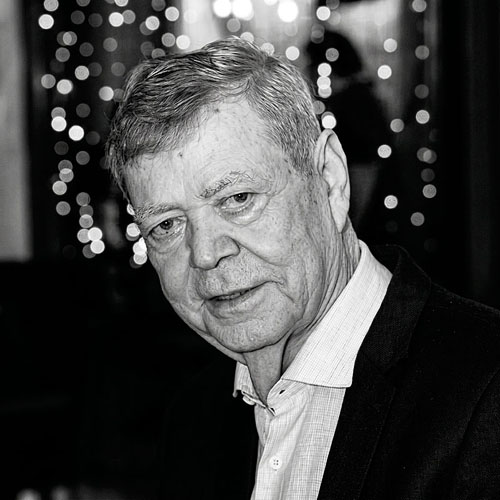
Revista Caminhoneiro – How was the idea of creating Farj born and what was the main objective at the beginning?
Moacir Bonassa – The idea of creating Farj was born from a very clear desire: to provide our children with better living conditions than my wife, Rosa, and I had at the beginning of our journey. At the time, I was a machinist (lathe operator), and from the start, the goal was to build something solid that would bring security, stability, and peace of mind to the family. I wanted to guarantee a good education and the opportunity to study for my children. I often say I dreamed of the day my wife could go to the market without having to crunch numbers, without worrying if there was enough money to buy oranges or bananas. This simple but meaningful wish represents dignity, freedom, and the possibility of living with more serenity. It was from this purpose that Farj began to be built.
Revista Caminhoneiro – Farj’s history is deeply intertwined with your personal story. What was it like to be an entrepreneur in those early days?
Moacir Bonassa – Farj was founded in 1978, and the company’s history has always been profoundly linked to my personal trajectory. Entrepreneurship was never simple, and in the beginning, the challenges were daily. I had a family to care for, dreams to fulfill, and a strong will to make it work. Rosa’s partnership was fundamental from the very first moment. With her support, the obstacles became lighter and the path more motivating. In the beginning, the priority was to establish ourselves in the market. Farj started as a workshop specialized in brake remanufacturing, and we had to build a name and gain trust. The biggest challenge of those early years was precisely being recognized as an honest, competent service provider committed to quality. This credibility was built with hard work, day after day, and became the foundation for everything that followed. In the end, despite the lack of material and financial resources, we never lacked the will to win.
Revista Caminhoneiro – Was the role of your wife, Rosa Maria Nader Bonassa, fundamental in the construction of Farj?
Moacir Bonassa – Absolutely. Rosa’s role was vital from the start. She was always by my side, actively participating in the company’s daily operations, working in sales and accounts receivable. Her presence helped structure Farj and bring balance to the business. At a certain point, she decided to step away from the daily routine to dedicate herself to a new chapter of life: the birth of our first grandson, Moacir Bonassa Neto. This truly shows who she is: an active, committed woman who never stopped contributing, whether in the company or at home. Without a doubt, her participation was—and will always be—fundamental.
Revista Caminhoneiro – Family has always played a central role in your journey. How many children do you have, what are their names, and how did this family connection inspire the name “Farj”?
Moacir Bonassa – We have three children: Fábio Bonassa, Ana Claudia Bonassa, and Junior Bonassa. Family ties have always been the foundation of everything, and this was naturally reflected in the company’s name. “Farj” is a direct tribute to our children and my wife Rosa, formed from the initials of their names. It was a way to eternalize this bond and record, from the beginning, that the company was born supported by solid and well-defined values.
Revista Caminhoneiro – What has been the most memorable moment in Farj’s history so far?
Moacir Bonassa – Without a doubt, the purchase of the first machine. This is a moment we remember with great joy to this day. It was a decisive step for the company’s development. Throughout our trajectory, we had other important milestones—achieving ISO 9000 certification, the strategic decision to end remanufacturing to focus exclusively on manufacturing—but nothing compares to the importance of that first machine, which is actually on display here. It represents the beginning of everything. It is an IMOR lathe, which at the time had an essential function: producing parts that I considered too expensive to buy on the market. Since I was a machinist by trade, I worked during the day and dedicated myself to producing these parts at night. This effort, this dedication, and this machine were fundamental to giving birth to Farj and building the solid foundation the company has today.
Revista Caminhoneiro – What are Farj’s main products currently?
Moacir Bonassa – Today, our flagship product is the clutch servo. The company is a major manufacturer of clutch servos and cylinders, which represent the largest part of our production. Additionally, we also manufacture compressor heads, expanding our portfolio. However, clutch servos remain the highlight, both in volume and strategic importance for the company.
Revista Caminhoneiro – What differentiates Farj from its competitors?
Moacir Bonassa – Our main differential lies in a few very clear pillars. One of them is quality, which for us is absolutely non-negotiable. This concept isn’t just in our speech; it is part of the company’s values and guides all decisions, from product development to final delivery to the customer. Furthermore, Farj stands out for its close customer service and efficient after-sales support, with a real concern for following up with the client even after the sale is completed. We also have technicians acting directly in the field, visiting the market, providing support, guiding applications, and helping to generate demand in a technical and responsible way. This combination of rigorous quality, technical presence in the market, and a close relationship with the customer is what sets us apart and sustains the trust that Farj has built over the years.
Revista Caminhoneiro – Which markets does the company serve today? Does Farj operate nationally or internationally?
Moacir Bonassa – Today, Farj focuses entirely on the domestic market, serving customers in all regions of Brazil. Additionally, the company is also present in the international market, with a consolidated operation in South American countries. This regional expansion reinforces the brand’s strength and demonstrates that our products meet the quality standards required both in the domestic market and abroad.
Revista Caminhoneiro – Could you tell us a bit about Farj’s current manufacturing plant?
Moacir Bonassa – Since its founding, the company’s philosophy has always been to invest in modern technology as the basis for its development. Currently, we have a modern manufacturing plant equipped with state-of-the-art machinery, such as injection molding machines and lathes. Although our Industry 4.0 initiatives are still in the early stages, we are already structuring processes and adopting technologies aligned with this concept, focusing on innovation, efficiency, and automation. Our production environment reflects this commitment to continuous modernization.
Revista Caminhoneiro – What are the main challenges for the sector in the coming years?
Moacir Bonassa – One of the main challenges for the sector today is the economic scenario, especially high interest rates, which directly impact companies’ investment capacity. With the high cost of capital, many business owners adopt a more cautious stance, postponing expansion and modernization projects. Another important point is the uncertainty regarding tax reform. There are still many questions about how it will be implemented and what its practical effects on the industry will be, which creates insecurity in medium and long-term planning. We also face a significant challenge in training and retaining labor. The industrial sector requires qualification, discipline, and a career vision, but today there is a change in labor market behavior, with professionals seeking more flexibility and immediate returns. This creates a mismatch with industrial logic, which invests in training and development with the long term in mind. Historically, the auto parts industry has always been an environment for professional growth, with countless examples of people who started in entry-level roles and reached leadership positions. Maintaining this culture of training and continuity is a key challenge for the future of the sector.
Revista Caminhoneiro – What advice would you give to someone who wants to venture into business in Brazil today?
Moacir Bonassa – Entrepreneurship in Brazil continues to demand a lot of dedication—that is undeniable. But today, more than working long hours, it is essential to work with purpose, preparation, and intelligence. The entrepreneur needs to study, deeply understand the market, know who their customer is, how they consume, where they consume, and what truly generates value for them. It is no longer like the old days when effort and courage alone were enough to make a business prosper. Today, the complexity is greater. We live in an era where success is linked to strategy, innovation, and customer experience. Even in traditional sectors like manufacturing, you have to think about the customer journey, service quality, relationships, and process efficiency. Furthermore, the market has changed. We see the emergence of many startups, new business models, digital solutions, and different ways of generating value. This does not eliminate the importance of industry, but it shows that entrepreneurship today requires adaptation, a vision of the future, and the ability to learn continuously. Therefore, the main advice is: be willing to dedicate yourself, yes, but mainly to prepare yourself, stay updated, and understand the new market context. Working hard is important, but working well and strategically is essential.
Revista Caminhoneiro – What gives you the most pride when looking back at Farj’s journey?
Moacir Bonassa – What makes us most proud is Farj’s contribution to strengthening the national industry. From the beginning, we believed in the importance of producing in Brazil, investing in the development of technology, people, and our own processes. Nationalization allows us to closely monitor every stage of production, continuously improve our internal standards, and evolve alongside the demands of the heavy-duty vehicle market. This direct involvement with the production process is fundamental to sustaining a culture of quality, innovation, and technical responsibility. Producing in the country also means generating jobs, developing the local production chain, and contributing to the growth of the Brazilian automotive industry as a whole. For us, it is a long-term construction based on consistency, continuous learning, and commitment to the sector. Looking at Farj’s trajectory and seeing that we continue to grow with this vision, even in the face of market challenges, is a source of great pride.
By Graziela Potenza
Source: https://pdf.magtab.com/reader/revista-caminhoneiro/26426#page/9